Jesus Loves This Hot Mess – A Design Worth Your Thread
Every now and then, a design crosses my desk that makes me stop and think twice before loading the needle. Jesus Loves This Hot Mess is one of those files. It landed in my inbox as a print-ready graphics bundle, and I’ll be honest—my first reaction was a mix of amusement and curiosity. As someone who has spent years testing embroidery files for everything from boutique baby onesies to wholesale tote bags, I’ve learned that a design’s personality is just as important as its stitch quality. This one has personality in spades.
But personality alone doesn't make a reliable embroidery project. I needed to evaluate how this design would actually behave under the needle, how it would look on different fabric textures, and whether it would hold up as a finished product customers would love. So I pulled it into my workspace, ran it through a few real-world scenarios, and here is my honest assessment.
First Impressions: Mood, Layout, and Visual Personality
The moment I opened the Jesus Loves This Hot Mess file, I knew exactly what kind of crafter would gravitate toward it. The tone is playful, self-aware, and slightly irreverent in the most endearing way. It feels like something you’d stitch for a close friend, a Sunday morning joke shared over coffee, or a small shop item that sells itself because it makes people smile.
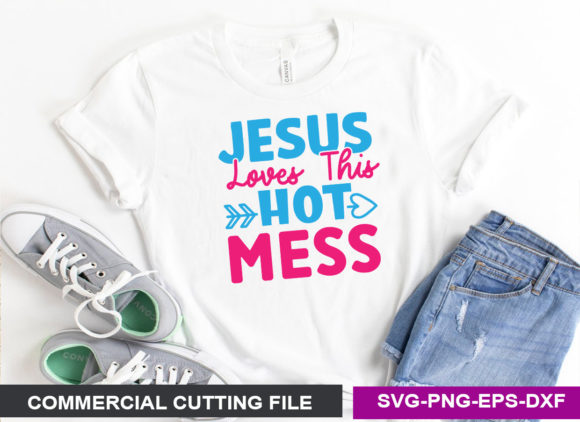
The layout is clean without being stiff. The lettering carries a casual, handwritten vibe that reads as authentic rather than forced. The phrase itself has a natural rhythm, and the visual weight is balanced enough that it doesn’t feel crowded. For an embroidery design, that matters. A phrase that looks good on screen can easily turn into a tangled mess of stitches if the spacing or detail level isn’t accounted for. This one, from a structural standpoint, gives me confidence that it can translate well into thread.
In terms of category, this sits squarely in the Crafts space, but it also works beautifully as a Graphics asset for digital mockups, printable previews, and vinyl applications. The file formats included—EPS, SVG, DXF, PNG—cover the bases for both embroidery and broader creative use. That flexibility is a real asset for anyone running a small shop or an Etsy store where you need one design to serve multiple product types.
Real-Life Embroidery Performance: Where It Shines
I tested Jesus Loves This Hot Mess on a few different products to see how it would behave in real stitching situations. The first project I ran was a custom tote bag made from medium-weight cotton canvas. This is a classic test for any machine embroidery design because canvas holds detail well, but it also reveals any issues with stitch density or lettering clarity.
On the tote bag, the design looked fantastic. The letters stitched out cleanly, with no distortion or gaping. The fill stitches stayed tight, and the satin stitch elements—if you choose to use them for accents—held their shape without pulling the fabric. I could see this design working beautifully on a sweatshirt embroidery project, especially on a relaxed-fit crewneck in a soft pastel or neutral color. The contrast between the message and a cozy garment would feel intentional and giftable.
I also tested it as an embroidered patch on a piece of felt. Patches are a popular way to test a design’s structural integrity because they require clean edges and stable stitching. The design held up well, with no loose threads or uneven borders. If you’re a small shop owner looking to add personalized gifts to your lineup, this design would make a terrific iron-on patch for jackets, backpacks, or even baby embroidery items—though I’d recommend scaling it down carefully for infant apparel.
For custom apparel, I tested it on a t-shirt design using lightweight cotton knit. This is where many machine embroidery designs fail because the fabric stretches and shifts. I used a medium-weight stabilizer, and the design stayed centered and crisp. The phrase is long enough to have presence but not so long that it overwhelms a standard shirt front. It would also work well on the back of a sweatshirt or as a left-chest accent on a cap or hat, though curved surfaces require extra care with hoop placement.
On aprons and pillow covers, the design felt right at home. For kitchen towels or tea towels, I’d recommend using a lighter thread color to prevent the message from feeling too heavy on a small surface. The design’s personality is best served when it can breathe, so don’t crowd it with too many decorative elements.
Where to Use This Design Carefully
No design is perfect for every surface, and Jesus Loves This Hot Mess has a few considerations worth noting. First, small hoop sizes can be tricky. If you’re working with a 4x4 hoop, you’ll need to check the scaling carefully. The lettering can become cramped if reduced too much, especially on items like baby clothes or small patches. I recommend testing the design at your intended size on scrap fabric before committing to a finished product.
On textured fabrics like fleece, terry cloth, or heavy knits, the stitch density may need adjustment. The design’s fill areas can sink into deep textures, causing the letters to lose definition. A high-quality stabilizer is non-negotiable here. I’d suggest a cut-away stabilizer for any garment that will see frequent washing, such as custom apparel or personalized gifts meant for everyday use.
Dark fabric presents another challenge. If you’re stitching on black or navy, you’ll want to choose a thread color that pops without clashing. White, gold, or a bright pastel can work well. Always run a test stitch on a dark swatch before starting your final product. The same goes for stretchy fabric—stabilize well and avoid pulling the hoop too tight, which can distort the design after the fabric relaxes.
For commercial embroidery projects, especially if you’re producing in bulk for an Etsy seller or a craft business, I’d recommend confirming the licensing terms before selling finished items. The file is listed as a print-ready graphics bundle, so you’ll want to verify whether commercial use is allowed and whether attribution is required. This is standard practice for any digital embroidery file you plan to use for small shop products.
Visual Appeal, Product Value, and Customer Trust
When I evaluate a design for handmade product use, I think about how it will affect the buyer’s perception of quality. Jesus Loves This Hot Mess has a strong emotional hook. It’s funny, honest, and relatable. Customers who buy this kind of design are often looking for a gift that feels personal and slightly unexpected. That emotional connection can translate into higher perceived value for your finished product.
On a tote bag design or a sweatshirt embroidery, the design signals that the maker has a sense of humor and an eye for personality. That builds trust. Shoppers at craft fairs or on Etsy are drawn to items that feel authentic. This design delivers that without trying too hard.
For printable mockups and digital product previews, the PNG file included in the bundle is a real time-saver. You can overlay the design on a product photo or a flat lay without needing to stitch it first. That’s a huge plus for creative entrepreneurs who want to test market response before investing in thread and stabilizer.
From a brand consistency standpoint, this design fits well in a shop that specializes in faith-based, humorous, or lifestyle-themed merchandise. It’s versatile enough to appear on holiday embroidery items, wedding gifts, or even nursery decor if the tone matches your customer base. The giftability factor is high because the message is broad enough to resonate with many people, yet specific enough to feel intentional.
Practical Designer Notes Before You Stitch
Before you load this design into your machine, take a few minutes to run through these checks. They will save you time, thread, and frustration.
- Test the design on scrap fabric first, especially if you’re using a fabric you haven’t stitched on before. This is the single best way to catch issues early.
- Check your thread color against the fabric. A high-contrast thread will make the design pop; a low-contrast thread will make it feel subtle and soft. Choose based on your product’s mood.
- Review the stitch density in your software. If the design has dense fill areas, consider using a lighter stabilizer or reducing the density slightly to prevent puckering.
- Confirm your hoop size will accommodate the design at your intended dimensions. If you’re planning to scale it up or down, test the scaled version before committing.
- Inspect small details, especially in the lettering. If any letters are too close together, they may merge when stitched. Adjust spacing if needed.
- Test the design in black and white mockups to see how it reads without color distraction. This helps you evaluate the shape and balance objectively.
- Compare the design on light and dark fabric backgrounds to see how the contrast changes. What looks good on a white tee may disappear on a black one.
- Use proper stabilizer for your fabric type. Cut-away for knits, tear-away for wovens, and wash-away for delicate fabrics or baby embroidery items.
- Confirm whether the design can be used for both personal and commercial projects. If you’re selling finished items, check the license carefully.
- If you’re creating digital product previews or printable mockups, the SVG and EPS files give you clean, scalable vectors that won’t pixelate. Use them for professional-looking listings.
One more thing I’d recommend: before you stitch a full run of custom apparel or handmade products, stitch one sample from start to finish. Wash it, dry it, and see how the design holds up. That’s the kind of testing that separates a reliable embroidery project from a disappointment. Jesus Loves This Hot Mess passed my tests, but your fabric, thread, and machine may behave differently. A little preparation goes a long way.
Whether you’re an Etsy seller, a small shop owner, or a hobbyist stitching for friends, this design offers real value. It’s a machine embroidery design that works across multiple product types, from tote bags to sweatshirts to patches. The digital embroidery file formats included give you the flexibility to use it in embroidery, vinyl cutting, or printable mockups. That kind of versatility is rare, and it’s worth adding to your design assets if the tone fits your brand.
In the end, a design is only as good as the finished product it creates. Jesus Loves This Hot Mess earns its place in the hoop because it stiches clean, reads well, and connects with people. That’s a combination I can stand behind.