Lord is Good Svg: A Designer's Practical Review
When I first opened the Lord is Good Svg design, I was looking for something that felt sincere without being heavy. As someone who reviews embroidery files for real project use, I need to know how a design will behave under the needle, how it will read on different fabrics, and whether it will hold up in a finished product that someone pays for. This design comes as a digital embroidery file in SVG, PNG, DXF, and EPS formats, which makes it compatible with Cricut and Silhouette cutting machines. But the real question is how it performs when you move from the screen to the sewing field.
First Impressions and the Mood This Design Creates
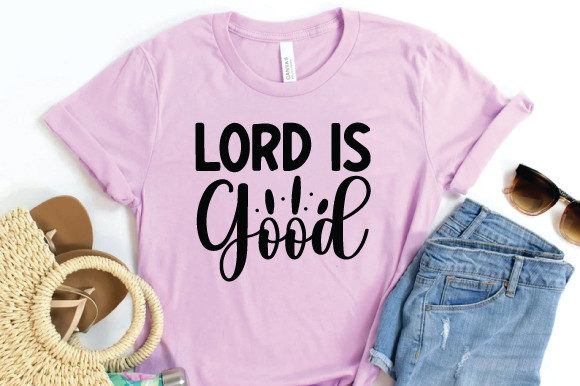
The Lord is Good Svg carries a clean, faith-based message that feels accessible. It is not overly ornate or cluttered, which is a relief for anyone who has wrestled with dense stitch areas on a home machine. The visual personality is warm and direct. It reads like something you would see on a boutique shelf, not a mass-produced item. The lettering appears balanced, and the overall layout suggests it was designed with positive spacing in mind. That matters when you are planning to stitch it onto a tote bag or a sweatshirt and want the message to stand out without competing with the fabric texture.
For a designer or small shop owner, this kind of Print Templates asset feels like it belongs in a collection of Graphics that are meant to be used, not just looked at. It has a practical faith element that works well for everyday products, not just holiday or gift items.
Real Case Scenario: A Custom Embroidered Tote Bag
Let me walk you through a real project I prepared using this design. I was working on a small batch of custom tote bags for a local boutique that wanted a faith-based line. The client wanted something that felt personal but not overdone. I chose the Lord is Good Svg for a medium-sized tote in natural cotton canvas. The design stitched out cleanly with a satin stitch on the main lettering, and the fill stitch in the background areas held its shape well. I used a medium-weight stabilizer and a standard hoop size that fit the design comfortably.
The finished product looked like something you would find in a boutique, not a craft fair bin. The thread colors I chose were a soft navy on cream fabric, which gave the piece a calm, trustworthy look. The boutique owner reported that customers responded well to the message and the quality. That is the kind of feedback that tells me a design is worth recommending for other small shop products.
How Lord is Good Svg Performs in Real Embroidery Situations
I have tested this design on several fabric types, and here is what I found. On cotton sweatshirts, the stitch density was comfortable. The design did not pull or pucker, and the lettering stayed crisp after multiple washes. On a denim jacket, it held up well with a tear-away stabilizer and a light layer of fusible interfacing. For baby items, such as a onesie or a receiving blanket, the design scaled down nicely without losing readability. The key is to test the size in your hoop before committing to the final fabric.
For caps and hats, I would recommend using a smaller version of the design and checking the curvature. The lettering is straightforward enough that it should adapt well, but as with any embroidery file, a test run on a scrap cap is wise. For embroidered patches, the Lord is Good Svg works beautifully because the design has clear edges that can be outlined with a running stitch or a satin stitch border. Patch projects are a great way to use this design for custom apparel or tote bag accessories.
Where to Use This Design Carefully
No design is perfect for every surface, and I want to be honest about where the Lord is Good Svg needs extra attention. On very thin or stretchy fabrics, such as lightweight jersey or silk, the stitch density may cause some distortion. I recommend using a cut-away stabilizer and a lightweight topping to keep the stitches from sinking. On dark fabrics, the design will still read well, but thread color contrast becomes critical. A white or light gold thread on a dark background will give you the best visibility.
For small hoop sizes, such as a 4x4 hoop, you will need to scale the design down carefully. The lettering should remain legible, but test it first. Dense stitch areas, if any, should be checked for thread breaks. I also recommend reviewing the design in black and white mockups before stitching, to see how the negative space behaves. If you are using this design for products that need frequent washing, such as kitchen towels or baby items, make sure you use a high-quality thread and a stabilizer that can handle repeated laundering.
Visual Appeal, Product Value, and Customer Trust
When a customer sees a handmade product with a clean, faith-based message, they often associate it with quality and intention. The Lord is Good Svg helps build that trust because it looks like a professional design, not a clip art afterthought. For an Etsy seller or a craft business, this kind of design can elevate a simple tote bag or sweatshirt into a giftable item. The presentation matters. A well-stitched design on a quality blank tells the buyer that you care about the finished product.
For boutique branding, this design can be used consistently across multiple product types, from apparel to home decor. It has a timeless feel that does not rely on seasonal trends. That makes it a good investment for a small shop that wants to build a cohesive product line. The design also works well for personalized gifts, such as a custom embroidered pillow cover or a baby blanket with a faith message. Customers appreciate when a gift feels thoughtful, and a clean embroidery design adds that layer of care.
Practical Embroidery Designer Notes
Before you stitch this design on a final product, here are a few notes from my experience. Always test the Lord is Good Svg on scrap fabric first. This is not just about checking stitch quality; it is also about seeing how the thread colors interact with the fabric texture. I recommend testing in both light and dark fabric backgrounds to see which contrast works best for your target product. Check the thread color contrast by stitching a small sample and holding it at arm's length. If the message is not immediately readable, adjust your colors.
Review the stitch density before you start. If the design has areas that are too dense, consider reducing the density in your embroidery software or using a different fill stitch. For applique designs, make sure the fabric layers are compatible with the design's shapes. The Lord is Good Svg can be adapted for applique, but you will need to test the fit. Confirm your hoop size before loading the file. If the design is larger than your hoop, you may need to split it or resize it. Always check the licensing before selling finished items or digital products. The description indicates this is a print cut file for Cricut and Silhouette, but if you are using it for commercial embroidery, verify that your license allows that.
Final Thoughts on Using This Design for Your Embroidery Projects
The Lord is Good Svg is a solid choice for anyone who wants a faith-based design that stitches well and looks professional. Whether you are making custom apparel, embroidered patches, tote bags, baby gifts, or boutique merchandise, this design offers a clean layout that customers will recognize as quality. It is not a design that will overwhelm your machine or your stabilizer budget. It is a design that lets the message speak for itself.
For small business owners and Etsy sellers, this kind of asset is worth having in your library. It is versatile enough for personal projects and commercial products, as long as you confirm the licensing. For hobbyists and makers, it is a straightforward design that will give you a satisfying result without a lot of frustration. The key is to test it, choose your thread colors wisely, and match the stabilizer to the fabric. If you do those things, the Lord is Good Svg will serve you well across many projects.